under construction
- Objectives: The students will:
Read and discuss a poem
Recall and interpret facts and extended meanings
Analyze the haiku and the use of imagery in a poem
Discuss the following themes: learning by observing nature; performance and change; the importance of details in nature
Materials: Haiku poems by Basho and Richard Wright
What is Haiku?
Haiku is a poetic form that originated in Japan hundreds of years ago
and continues today. Haiku combines form, content and language in a
meaningful, yet compact form. Haiku poets, who you will soon be, write
about everyday things.
In order to be true Haiku, a poem must consist of 17 syllables and
contain a Kigo. A kigo is a word that hints in what season the poem takes
place. If the poem contains no kigo, it is more properly called a senryu (this
could even be a 17 syllable poem about Spam or the lunch lady).
Many Haiku themes include nature, feelings or experiences. Usually
they use simple words and grammar. The most common form for Haiku is
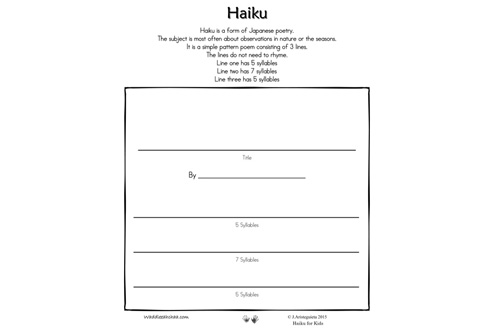
three short lines. The first line usually contains five (5) syllables, the second
line seven (7) syllables, and the third line contains five (5) syllables. Haiku
doesn’t rhyme. A Haiku must “paint” a mental image in the readers mind.
However, to understand Haiku we should look at the long, long history
of Japanese literature. Japanese literature is one of the world’s oldest and
greatest literatures. It reflects many characteristics of the Japanese people,
such as their appreciation of tradition and their sensitivity to nature.
Most of the people who wrote and enjoyed early literature in Japan were
members of the nobility. The greatest writers of the Heian period (794-
1185) were women. Later in Japanese history (1603-1867) the then “new”
verse form called haiku was developed. It originally began as a comic style
of verse that was simple to write. But in the late 1600’s, Matsuo Basho
changed haiku into a serious art form. His haiku, written according to strict
rules, describe subjects in nature and contain a reference to a season of the
year. These poems merely suggest ideas and feelings, and so the reader
must use imagination to interpret them.
A good article on the history of Huaku
10 haikuists and their works
From Basho to Koi
Haiku by Basho
Within plum orchard,
Sturdy oak takes no notice
Of flowering blooms.
The moon glows the same:
It is the drifting cloud forms
Make it seem to change.
Yellow rose petals
Drop one-by-one in silence:
Roar of waterfall.
Haiku Poems by Richard Wright
I am nobody
A red sinking autumn sun
Took my name away
Make up you mind snail!
You are half inside your house
And halfway out!
In the falling snow
A laughing boy holds out his palm
Until they are white
Keep straight down this block’
Then turn right where you will find
A peach tree blooming
The spring lingers on
In the scent of a damp log
Rotting in the sun
Whose town did you leave
O wild and drowning spring rain
And where do you go?
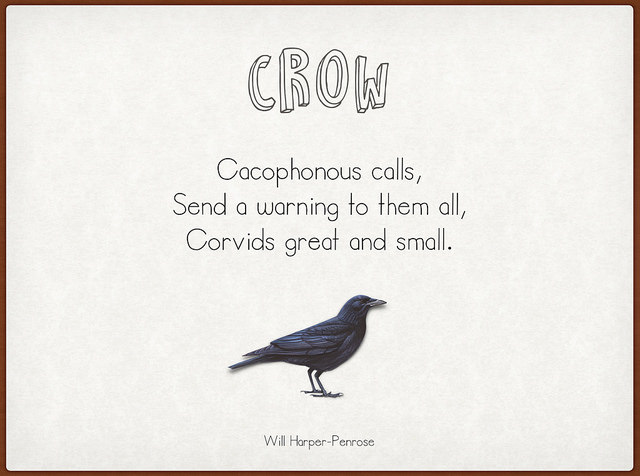
The crow flew so fast
That he left his lonely caw
Behind in the field
Motivation: Writing before reading
To help students appreciate the restrictive form of Haiku, challenge them to the following exercise: Have each student think of an animal or object, such as a dog or a telephone. Then have them write as many adjectives as possible to describe the thing. The first adjective must have one syllable, the second adjective two, and so on.
Reading and Response:
Literary elements: Haiku, Imagery
Study questions:
What took the speaker’s name away in the first poem?
In your own words describe the central pictures of the second and third poem.
In the fourth poem, what will be found following the speaker’s direction?
Give three details about the log pictured in the fifth poem.
Name three traits of the rain in poem six.
In the last poem, what did crow leave behind?
What order or reason can you find in the arrangement of the poems?
A haiku sometimes contains surprising twist. Which of these poems demonstrates this trait?
In what ways are Wright’s poems lie the traditional haiku” How are they different?
Poets often use seasons to suggest moods. What moods do you associate with each season?
Reflecting on the poems: Why do the poets focus on such minute, specific details of nature?
Review: About Poetry
Type of poetry
Speaker and Word choice
Sound
Imagery
Figurative Language-personification
Simile
Metaphor
- Enrichment and Extension:
Read at least 5 poems of haiku, and bring your interpretation of the poems into the class for an oral presentation.
Compose two original haiku by following the pattern of this type of poetry.
Notes for the lesson:
Haiku- In Japanese, a poem of about 17 syllables.
The Haiku Essence
To me, finding what gives the haiku its essence is what is most important in its study. Sure, everyone knows about the 5-7-5 structure and the inclusion of a seasonal reference, but these seem secondary when one looks at what makes the haiku different from other poetic forms. And that is called the “haiku moment.”
Haiku Moment: It seems easiest to liken haiku to a photograph, which captures a moment in time. A pure photograph describes a scene, and this description causes an emotional response in its viewer. There is no caption on the photograph that tells us what emotional response we are to take from it. It is instead a simple moment in time, unencumbered.
Haiku is the same thing. When a butterfly lands upon an open flower, what does the haiku poet take from this? The same thing that his reader will take from it when he describes the moment in verse. But he trusts his reader to sense the same emotion from his accurate description of the scene. He does not need to say “How beautiful!” in reference to the moment, because his words should evoke the correct response in his reader.
Japanese Nature
This type of art form is seen often in Japan, from the careful skill of Japanese flower arranging (ikebana), to the care in the presentation of given gifts. Food preparation is another art form which utilizes the same essence of beauty within a moment of time. Colors, shapes and textures and of course the sensation of taste, must all be taken into account, to be both harmonious and contrasting.
Haiku follows the same pattern as these examples. It captures a moment, describing objects within the frame, and the beauty is gleaned from the emotions evoked from such a presentation. Perhaps the most famous haiku poet, Basho, said, “The haiku that reveals seventy to eighty percent of its subject is good. Those that reveal fifty to sixty percent we never tire of.” What this tells us is that the nature of haiku is in letting the reader’s response finish the poem.
Urban Haiku Michael R. Collings
Silence–a strangled
Telephone has forgotten
That it should ring
Freeway overpass
Blossoms in grafitti on?fog
wrapped June mornings
Now it is your turn. Pick your favorite season. That season will be your theme.
Decide:
1) For what purpose will you write?
2) What mood do you want to convey?
Think of images, descriptive words, and figurative language that best describe that season (remember sounds, smells, sights). Jot them down in web form or as you think of them. Then the final step is to experiment by putting your ideas on the Haiku “skeleton” – 5, 7, 5 (syllables) and 3 lines.
3) After completing these Haiku, students will write Haiku about other themes using the same or similar procedures as before using words to paint pictures and suggestions of visual images.
(B. Wu, Murry Bergtraum HS, DeVern H. Phillips, https://oldses.files.wordpress.com/2010/12/haikupoetry2.pdf )
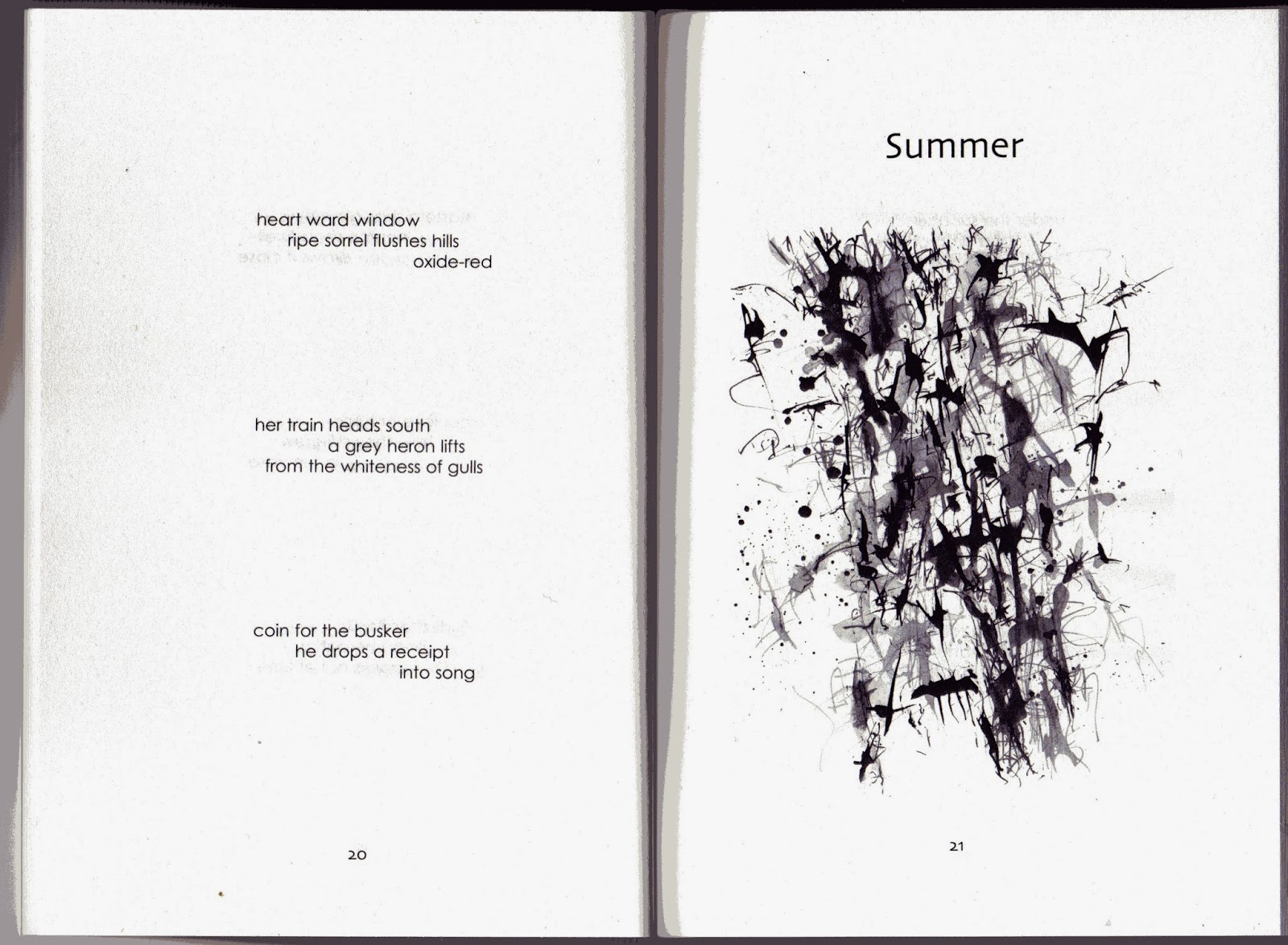
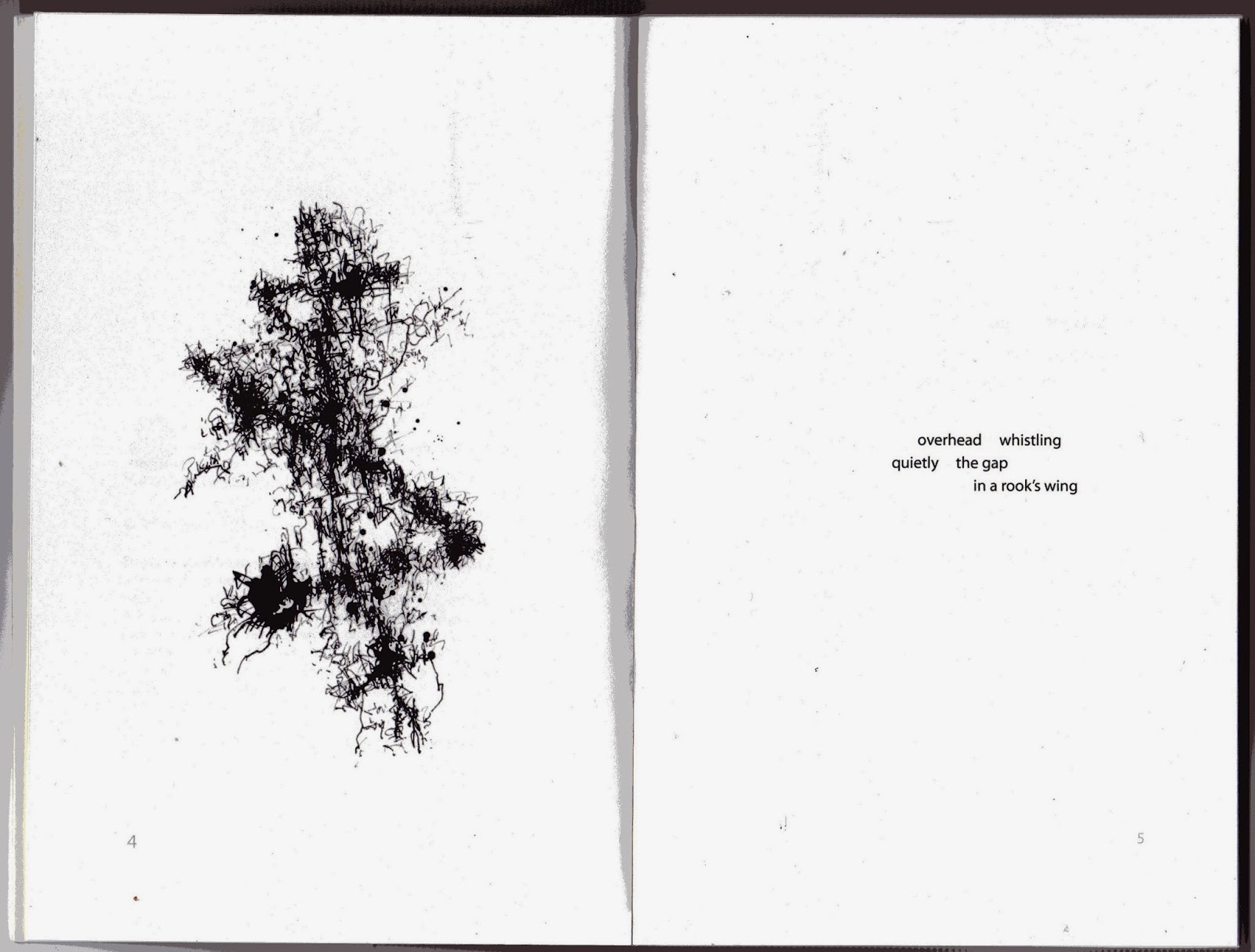
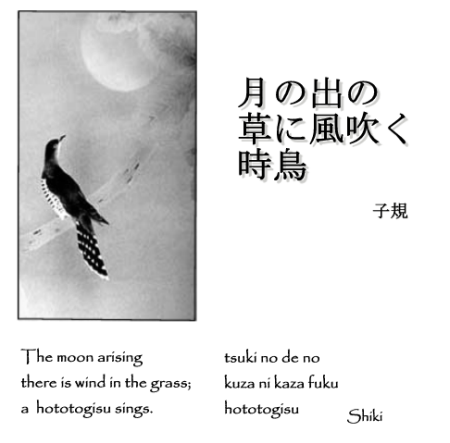
Gallery of Haiku/Image’s
Nature

Earth Science
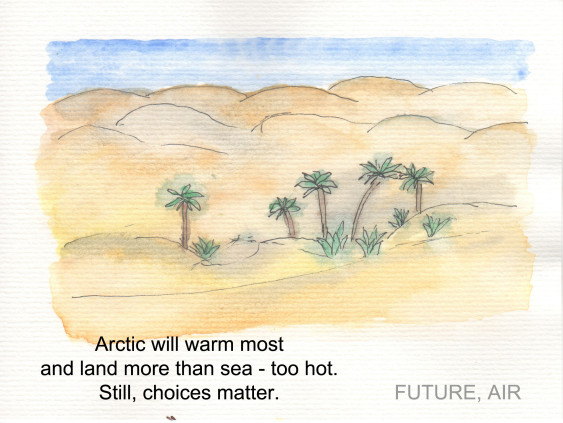
Current Events