
PARTICIPANT ELIGIBILITY
Students may register for VDSF if they meet ALL of the following criteria:
- They are enrolled in a school within the Vancouver public school district. This includes online courses (VLN), alternate schools (VASS), and district programs.
- NOTE: A project can only be registered with ONE school.
- If the project partners come from different schools within the Vancouver public school district (SD #39), they can decide which VSB school to register under for VDSF.
- If the project partners come from different school districts within the Greater Vancouver region, they may opt to represent the non-VSB district and apply directly to GVRSF without going through VDSF.
- In both cases, students should inform their respective schools of the partnership before starting any experiments and notify VDSF via e-mail (include their school’s VDSF contact) by the end of Semester 1 (January 29).
- NOTE: A project can only be registered with ONE school.
- They are a student in Grades 7 to 12 as indicated on their BC Ministry Form 1701 as of September 30, 2026.
- They worked on the project by themselves or with the same partner from start to completion.
- Their project meets Youth Science Canada’s ethics and safety guidelines.
- Their project has been nominated by an in-school selection process (e.g. school science fair, department consensus, teacher recommendation, etc.) to represent their school at VDSF.
- They have a teacher sponsor who is qualified to verify the student and the project’s eligibility. This person should
- be a science teacher from the student’s school
- have firsthand knowledge of the student’s project and its history
- have completed ethics approval training with VDSF (Level 1 or 2)
VDSF ethics approval workshops for teachers are offered in October and November. Prospective teacher sponsors need to attend one of these by Winter Break (December 18) whether their student’s project requires ethics approval or not. For more info, see VDSF Teams.
PROJECT ELIGIBILITY
- The project must meet the criteria for either an experiment, innovation, or study (see Project Considerations).
-
The project must be the work of the same one or two students from start to completion. Involvement from other students is not permitted at any point in the project’s development.
-
A project that was previously worked on by 2 students cannot be registered as a single person project. This includes situations where 1 student leaves the partnership the project is in between fairs, e.g. VDSF and GVRSF.
-
A student may not present more than one project at VDSF in the same year.
-
A student may not present a project that has already been presented at a previous district or regional science fair. A project may be presented as the continuation of a previous project if there has been substantial expansion or extension of the original investigation or design process (teacher sponsors will be asked to cite evidence of this before registration). If the project is accepted to VDSF, students may only present on the new work completed since the previous fair, though the earlier work may be referenced.
-
The project must meet Youth Science Canada safety guidelines and Youth Science Canada ethics guidelines, as well as Youth Science Canada guidelines on the use of generative artificial intelligence in STEM projects (if applicable).
REGISTRATION GUIDELINES
See VDSF registration for information on how to navigate the registration process.
-
Students should register for VDSF using their VSB student e-mail, not their personal e-mail.
-
Students should register according to the grade level on their BC Ministry Form 1701. If the project partners are from different grade categories (e.g. junior and intermediate), both partners should register under the higher grade category.
-
If a project requires ethics approval, students need to submit a formal request (see Ethics Approval). Once registration closes, any project without ethics approval will be disqualified.
-
Students may only identify someone as their teacher sponsor, parent/guardian, or project mentor if they have contacted that person and obtained their informed consent (preferably in writing, for project mentors).
-
Misrepresenting the nature of a project or anyone involved with the project (e.g. student, teacher sponsor, parent/guardian, project mentor) by deliberately withholding, fabricating, or altering information during the registration or ethics approval process is a serious offense. This may result in notification of the school, ineligibility for advancement to GVRSF, disqualification from VDSF, and/or restrictions on participation in future fairs.
-
It is the student’s responsibility to check their VSB student e-mail for updates to their VDSF registration or ethics approval request and respond in a timely manner.
Successful completion of registration does not mean that a project has been accepted to VDSF. The number of projects at VDSF is capped and projects are accepted based on school allocation limits. Additional projects are waitlisted and accepted if unclaimed spots become available.
STUDENT EXPECTATIONS AT VDSF
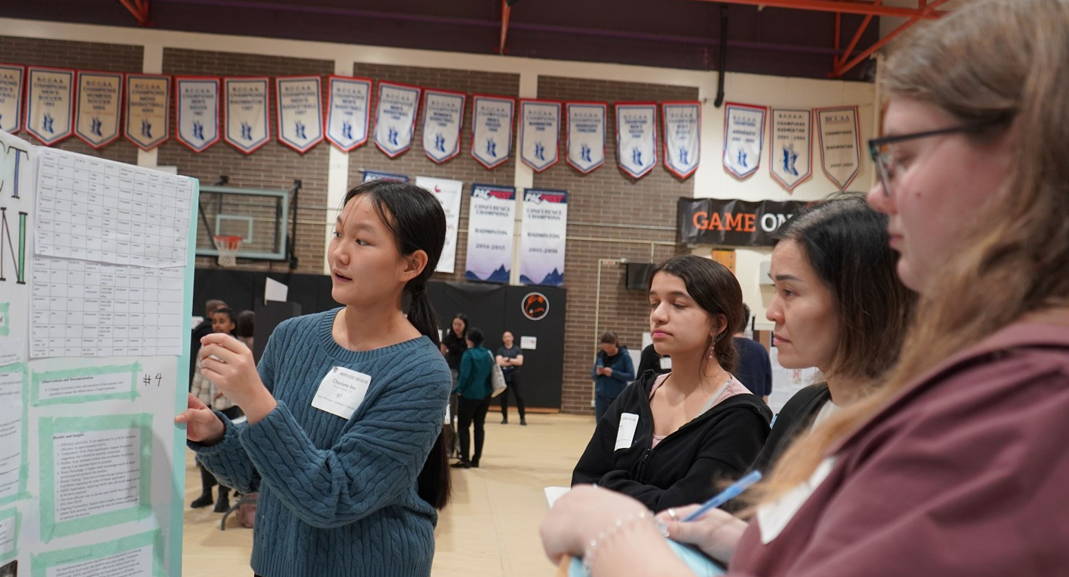
- By submitting the VDSF project confirmation form, students are indicating that they are interested and available to attend VDSF. If not, students should notify their teacher sponsor and the VDSF coordinator right away.
- VDSF participants are responsible for their own preparations. This includes attending the participant orientation, reading the e-mail instructions, testing their set-up for virtual judging beforehand, and arranging their own transportation to and from Langara.
-
VDSF participants are expected to know their judging schedule and be mindful of their judges’ time. This means standing ready at their display board before judges arrive and keeping to the time limit. Judges are not expected to wait around or return for a make-up round if a participant misses their session.
-
VDSF participants are expected to attend all of their scheduled judging sessions. This ensures that their project is evaluated by the required minimum number of judges. Missing a judging session results in fewer evaluations, which may affect the project’s overall standing.
-
Both project partners must be present at all judging sessions. Judges are directed to look for effective communication from both project partners. If either partner has or anticipates a schedule conflict due to commitments (e.g. provincial tournaments, school performances), they should notify VDSF as early as possible. Accommodations are made on a case-by-case basis, but only where possible.
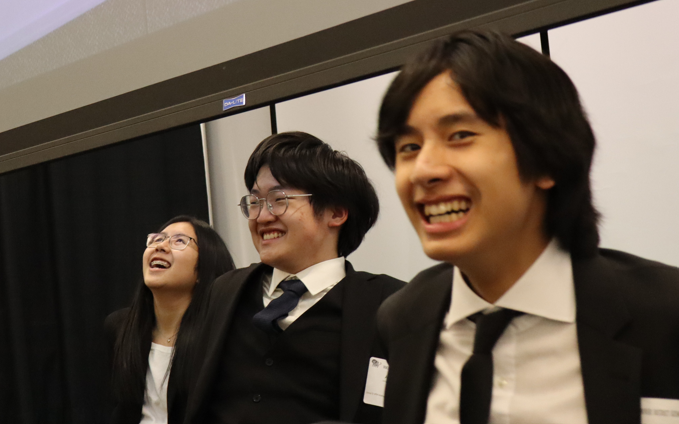 Students are expected to observe the district student code of conduct (VSB AP 350) for the duration of VDSF. This applies whether they are at VDSF as participants, visitors, or volunteers and in both virtual and in-person spaces.
 -
Decisions made by VDSF are final and not subject to appeal. VDSF includes its safety officers, judges, Chief Judge, and coordinator.
[Last updated: August 2026]